
 In the office of Dr. Belitsky in Broomall last month, he mentioned he was going to Minneapolis for the weekend. I told him that we have a local connection with Minneapolis — a local boy who went west to seek his fortune and became one of the wealthiest men in that city by the time of his death in 1914. His name? William Hood Dunwoody.
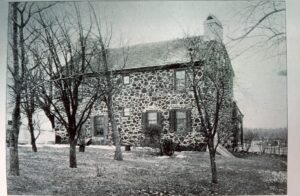
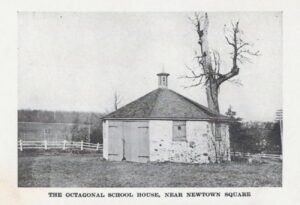
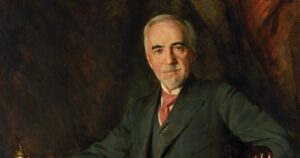 William was born in Westtown in 1841, the oldest of six boys. His father, James, and mother, Hannah Hood, moved to a farm in Newtown by 1843, when the next child was born. James gave part of his farm for the construction of an octagonal schoolhouse, and his children had an easy walk from their farmhouse to that school.
Young William and his brother Ezekiel began their careers in the grain business in Philadelphia, but soon followed Horace Greeley’s famous advice to “Go West, young man, and seek your fortune.” In 1869, the two brothers moved to Minneapolis, then emerging as a hub for railroads, shipping and 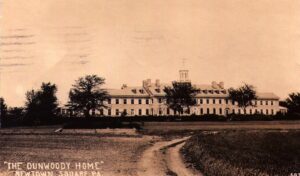 milling. William found early success as an agent buying and selling flour and wheat, and he expanded the Minneapolis millers’ markets into Europe. He later became co-owner of the Washburn-Crosby Company, which developed the Gold Medal Flour brand that still exists today. That company eventually merged with several others to form General Mills.
Milling made Dunwoody very wealthy, and his interests expanded into banking, the arts and philanthropy. He served on numerous corporate and charitable boards. At his death in 1914, he endowed the Dunwoody College of Technology, which remains a leading industrial trade school near downtown Minneapolis. He also endowed Abbott Hospital and was one of the first donors to the Minneapolis Institute of Art, creating a fund that continues to underwrite many of the paintings exhibited there.
 Closer to home, William donated the funds to build the concrete wall surrounding the Newtown Square Quaker Meeting burying ground. He also purchased his brothers’ shares of the family farm and endowed the Dunwoody Convalescent Home, originally a place where sick and injured men could be treated and nursed back to health. As models of care evolved, the home became Dunwoody Village, the retirement community that today offers residential living and continuing medical care.
In a follow-up visit with Dr. Belitsky, he said he took the tour of the mill complex in Minneapolis and was able to talk about the contributions of William Dunwoody, a child of Newtown Square. As the star pupil on the tour, they gave him a Gold Medal!
For more history on Newtown Square, Delaware County, and membership information, please visit our website at: https://nshistory.org/