
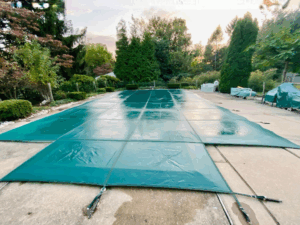
 Closing your pool for the season is an essential process that helps protect it from winter damage and ensures a hassle-free reopening in the spring. This process involves several important steps, including thoroughly cleaning the pool to remove debris, properly balancing the water chemistry to prevent algae growth and corrosion and lowering the water level to account for potential freezing. Additionally, it’s crucial to winterize all pool equipment—such as the pump, filter and plumbing lines—to avoid damage from freezing temperatures. Finally, securely covering the pool helps keep out debris and maintain water quality throughout the off-season. Taking the time to follow these steps can save you time, money and frustration when it’s time to open your pool again.
Here’s a more detailed breakdown:
- Clean and Balance the Water
Thorough Cleaning: Remove all debris, vacuum the pool, and clean the skimmer and pump baskets.
Chemical Balance: Adjust the pH, alkalinity, and calcium hardness to the recommended levels for winterization. This helps prevent algae growth and staining during the off-season.
- Lower the Water Level
Skimmer Line: Lower the water level to about 1 inch below the skimmer.
Prevent Freezing: This prevents water from freezing in the skimmer and other plumbing lines, which could cause damage.
- Winterize the Equipment
Drain: Drain the pump, filter, heater, and chlorinator to prevent freezing and damage.
Blow Out Lines: Use an air compressor to blow out the lines and remove any remaining water.
Store Equipment: Store any removable equipment like ladders, solar covers, and cleaners in a safe, dry place.
- Cover the Pool
Winter Cover: Install a winter cover to protect the pool from debris, sunlight, and water contamination.
Air Pillow: An air pillow under the cover can help displace water and prevent ice damage.
- Additional Tips
Shock the Pool: Add a pool shock treatment to kill any remaining bacteria or algae.
Winter Algaecide: Use a winter algaecide to prevent algae growth during the off-season.
Professional Help: If you’re uncomfortable with any of these steps, especially blowing out the lines, consider hiring a professional pool service.
When to Close: Consistent Low Temperatures: It’s best to close your pool when the outside temperature consistently stays below 65°F (18°C).
Avoid Warm Days: Closing when the weather is still warm can lead to algae growth.