
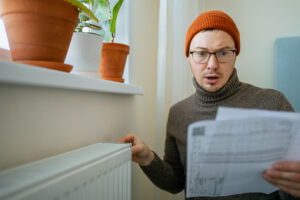
 As colder weather arrives, many homeowners expect their heating bills to increase. But when a utility bill suddenly seems much higher than expected, the heating system is often the first thing blamed.
While an inefficient furnace, boiler or heat pump can certainly contribute to higher energy costs, the heating equipment is only one part of the equation. Here are five common reasons your home may be using more energy than expected this winter.
- Check the air filter
For homes with forced air heating, a dirty filter can restrict airflow and make the system work harder to heat the home. During the heating season, standard 1-inch filters should generally be checked about once a month.
Homes with boilers and baseboard heat do not typically have an air filter to replace.
- Look for air leaks
Even a perfectly operating heating system will struggle if the heat it produces is constantly escaping. Older windows, exterior doors, attic access panels and other gaps in the home can allow cold outdoor air in and heated air out.
Simple improvements such as weatherstripping and sealing obvious air leaks can make a noticeable difference in comfort.
- Don’t overlook insulation
Heat naturally moves toward colder areas, which makes attic insulation especially important during the winter. A poorly insulated attic can allow a significant amount of heat to escape through the top of the home.
If upstairs rooms are difficult to keep warm or the heating system seems to run constantly, insulation may be worth investigating before assuming the heating equipment is the problem.
- Pay attention to thermostat settings
Every degree matters. Increasing the thermostat setting means the heating system has to operate longer to maintain the higher indoor temperature.
Programmable and smart thermostats can help reduce unnecessary heating when everyone is sleeping or away from home, but homeowners should still choose settings that keep their families comfortable.
- Make sure the heating system is operating properly
Heating equipment can sometimes continue working even when it is not operating as efficiently as it should. Dirty components, improper airflow, aging parts or other mechanical problems may increase energy consumption without causing the system to stop heating altogether.
Regular maintenance can help identify these issues and make sure the equipment is operating safely and properly.
A higher winter utility bill does not automatically mean you need a new heating system. Before considering replacement, look at the entire home. Sometimes the solution is the heating equipment, but other times a filter, thermostat setting, air leak or insulation problem may be the real culprit.
Expert Tip:
If your heating bill suddenly increases compared with the same period last year, compare actual energy usage rather than just the dollar amount. Utility rates can change, so a higher bill does not necessarily mean your home used more energy.