
 If you’ve been reading Newtown Square Friends & Neighbors for a while, you know that I usually write our feature cover stories. But with our nation celebrating its 250th birthday, I wanted to turn to someone whose passion for history is matched only by his ability to bring it to life. Local historian Doug Humes, a member of the Newtown Square Historical Society and the writer behind our History Spotlight articles, graciously agreed to
take the reins for this month’s feature. In the pages that follow, Doug explores a side of the American Revolution that is often overlooked and reminds us that even in times of deep division, remarkable things can emerge. ~Sheila Turner-Hilliard
A House Divided
On July 4, 2026, we will celebrate the 250th anniversary of the Declaration of Independence. It is a fitting moment to ask exactly what we are celebrating and why. When most Americans hear the phrase “civil war,” they think of the conflict between North and South from 1861 to 1865. Yet the American Revolution was, in many respects, the nation’s first civil war. It divided colonies, communities, churches, military units and even families. Through the soft glow of history, we often picture the Revolution as a struggle between united American patriots and an invading British army. The reality was far more complicated. Americans found themselves scattered across a spectrum of loyalties: Patriots seeking independence, Loyalists remaining faithful to the Crown, many seeking neutrality and others simply trying to survive while avoiding the dangers of choosing sides. The colonies were not united states, but disunited at every layer of society.
And yet, from those divisions emerged a nation. The men who signed the Declaration of Independence did not speak for a united people; they spoke for a people deeply divided about the course ahead and uncertain of the outcome. Over the next eight years, Americans fought not only British soldiers but also one another. The fights spilled out from the halls of government to local taverns and congregations and family dinner tables. The remarkable story of the American Revolution is not that Americans agreed with one another, but that they ultimately built a nation capable of surviving disagreement. Two hundred and fifty years later, we remain divided in many ways. By examining how our ancestors confronted the conflicts of their time, we may find lessons worth carrying forward into our own lives and passing on to the generations who will inherit the next 250 years of the American experiment.
THE SEEDS OF WAR
The Revolution did not start on July 4, 1776. The causes of the war, many of which were listed in the Declaration, were seeds planted in the aftermath of what we refer to as the French and Indian War, from 1754-1763. Britain sent troops to America to defend colonists against both the French and the Indians who allied with them against the English settlers. Maintaining an army costs money, and so after that war the British Parliament adopted what they thought was a very reasonable tax on all legal documents and printed material such as newspapers, pamphlets, deeds, wills and other assorted documents. The Stamp Act of 1765 was the first tax levied directly on the American Colonists, and they did not like it one bit. They threatened violence on the tax collectors, and the following year the tax was repealed. The Townsend Acts of 1767 imposed tariffs on imported goods
such as glass, paper, paint, lead and tea. The British sent troops to Boston to help enforce that law, and on March 5, 1770, the Boston Massacre shed the first blood of the conflict. The British repealed all the acts except the tea tax. This was not enough for the angry mobs in Boston, who proceeded to dump the untaxed tea into Boston Harbor in 1773. The British responded by closing Boston Harbor until the tea was paid for. The First Continental
Congress met at Carpenters Hall in Philadelphia to try to present a united front in dealing with Britain, while urging the colonies to begin forming and training militias. Once again in Boston, the disputes boiled over – the British had marched out in April of 1775 to seize Rebel supplies in Lexington and Concord and were greeted by armed farmers who gave battle and chased the British back to Boston with heavy losses. In June, the same forces met again and battled on Bunker Hill, with heavy casualties on both sides. The Second Continental Congress met in June of 1775 and authorized the formation of the Continental Army, with George Washington appointed commander. All of these actions preceded the events of July 4, 1776.
SECOND CONTINENTAL CONGRESS
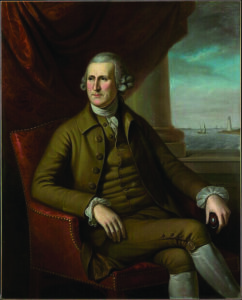 The Second Continental Congress began meeting in Philadelphia in May of 1775. The Colony of Georgia did not send any delegates to the first Congress, as the Loyalists were still in control, but when word spread about the various conflicts in Boston, the Loyalists were purged from power. Georgia selected delegates for the Second Congress, but they refused to go, as they disagreed on the actions that should be taken. One Georgian,
Lyman Hall, came as a non-voting delegate. Virginia had fewer qualms about conflict and instructed its delegation to present a motion to declare independence. John Adams and the Massachusetts delegation, who had borne the brunt of the conflict for the first 5 years, were also pushing for that
type of declaration. The Congress authorized a committee to draft a declaration, and Thomas Jefferson poured his heart into the effort in his rooming house on Market Street. There was less support in the middle states of New York, Pennsylvania, New Jersey, Maryland and Delaware. Their delegates were not initially authorized to vote for independence. Beginning in June, several states received their marching orders to approve the resolution. Other states changed their positions by force – in New Jersey, the Royal Governor, William Franklin, son of Pennsylvania delegate Benjamin Franklin, was arrested and imprisoned; and New Jersey then selected new delegates and sent them off to support independence.
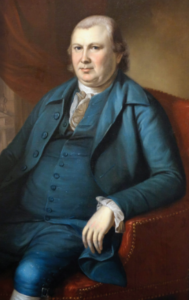 Pennsylvania was divided. Thomas Willing and Robert Morris, two of the richest men in Pennsylvania, were both delegates to the Congress. Willing, with his hands on all of the levers of power, urged caution. John Adams noted that elite merchants in the Colonies, whom he deemed to be “governed by Willings” held significant sway. When the first vote was held on July 1, 1776, Pennsylvania voted against the Declaration, as instructed by the Pennsylvania Assembly. Willing, John Dickinson, Charles Humphreys and Robert Morris voted no, while Benjamin Franklin, John Morton and James Wilson voted yes.
A second vote was held the next day. Robert Morris and John Dickinson absented themselves from the vote. Willing and Humprheys again voted against the final declaration, but with Morris and Dickinson absent, Franklin, Wilson and Morton voted for the declaration, and Pennsylvania joined the other states to declare independence. Willing explained his vote, saying, “I voted against this Declaration in Congress, not only because I thought
America at that time unequal to such a conflict as must ensue (having neither Arms, Ammunition or Military Experience), but chiefly because the delegates of Pennsylvania were not authorized by their instructions from the Assembly, or the voice of the People at large to join in such a vote.”
His business partner, Robert Morris, concurred. And yet Morris signed the Declaration of Independence, saying, “I am not one of those politicians that run testy when my own plans are not adopted. I think it is the duty of a good citizen to follow when he cannot lead.”
Willing, the reluctant revolutionary, did not sign the document. But he was not a Tory, and throughout the war, he and Morris used their wealth and connections to raise the money to keep alive the American cause.
WAR COMES TO PENNSYLVANIA
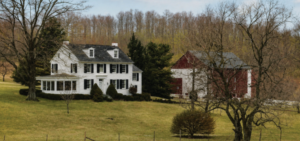 Once the Declaration was adopted, it was not long before the war came to Pennsylvania. The British sailed up the Chesapeake Bay in September of 1777, landed at Head of the Elk near today’s Elkton, Maryland, and began marching north towards Philadelphia. There were a series of battles during this Philadelphia Campaign – at Brandywine, the Battle of the Clouds in Great Valley, the Paoli Massacre, a face-off at Fort Washington and at Germantown. The British occupied the American capital city of Philadelphia, and the Second Continental Congress fled. It is reported that when British General Howe entered the City, local Loyalists lined the streets to cheer the British troops. But the British found themselves to some degree in a jail of their own making. They needed supplies – food and fuel for themselves and their livestock. The urban city had been the marketplace for the farmers in the countryside, but American troops choked off any supplies headed for the city. The British responded by sending raiding parties out into
the countryside.
General Cornwallis made a three-day raid into Chester County in December 1777, and some of the British soldiers entered Newtown and Marple, “Robbing and plundering every person they came across.” Gen. James Potter indignantly records, “My pen can’t describe their barbarity and cruelty, nor can you conceive the waste and Destruction that attended their footsteps everywhere they go.” Losses by Chester County residents during these raids are understated in the list of claims recorded by local residents after the War. Marple, Newtown and Edgmont were largely Quaker, and the Quakers generally made no claims for their losses.
Yet local residents found little relief when the British departed. Just miles away, Washington’s army struggled through the winter at Valley Forge, consuming enormous quantities of livestock, grain, hay, timber and horses. Washington repeatedly issued orders against unauthorized plundering, but hungry soldiers often took what they needed. For many Chester County farmers, especially Quakers who sought neutrality, the distinction between friend and foe could become blurred. Both armies required supplies, and if those supplies were not purchased, they would nevertheless be
taken. A soldier’s stomach has no loyalty to any political cause.
QUAKERS DIVIDED
Marple and Newtown were settled by Welsh Quakers beginning in the late 1600’s, attracted by cheap and plentiful farmland and William Penn’s promise of tolerance for all religions. By 1776, these original settlers were into the 3rd and 4th generations living on the original farms granted by Penn. They farmed, took their goods to markets, raised their families, and worshiped and socialized with each other on Sundays at their “Meeting House”. Quakers were pacifists, committed to “bear testimony against war,” and many refused to take oaths of allegiance or serve in the military. But principles are easier kept when war is not on your doorstep. When the British marched through the countryside, looting farms and barns, many young Quaker men ran off to join the militia, while their elders counseled peace and patience.
A Lower Merion Quaker, miller John Roberts III, was caught in the same crossfire in occupied Pennsylvania. He did business with both American and British troops, but when the British left Philadelphia, Roberts and another elderly Quaker, Abraham Carlisle, were tried for “waging cruel war against this Commonwealth.” Despite pleas from more than a thousand residents urging mercy, the two men were hanged in public in 1778, as an example to others. Many other Loyalists who had cheered the British entry now fled the city, and their properties were confiscated. Though the war continued in other Colonies, the war had ended in Pennsylvania and the “winners” exacted partisan justice against those who had chosen the wrong side to support.
NOTORIOUS FITZ
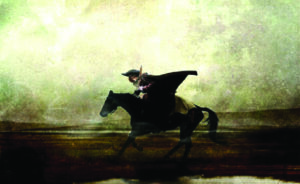 James Fitzpatrick, a Chester County blacksmith, joined the American Army and served during the Battle of Long Island. However, like so many colonial farm boys, he had no real concept of what army discipline required. When he was severely whipped for a small infraction, he had his fill of army life and left – deserted, said some – and returned to Chester County to resume his life there. The Army came looking for him – and from that point on, he became a bitter enemy of the American cause. When the British occupied Philadelphia and authority across Chester County weakened, Fitzpatrick reinvented himself—not as a soldier, but as an outlaw. Calling himself Captain Fitz, he launched a campaign of bold robberies across the region. His preferred ground was the Lancaster Road—the main artery between Philadelphia and the interior, but was reported at both the Square Tavern and the Fox Chase Inn in Newtown.
Captain Fitz not only robbed, but had a sadistic streak – in one well-known incident, he tied a militia officer to a tree, cut off his carefully maintained queue, and flogged him. But the same boldness that built his reputation also led to his downfall. On August 23, 1778, Fitzpatrick entered the home of Captain Robert McAfee in Edgmont, intending another routine robbery. Held at gunpoint, McAfee and a servant girl seized an opportunity during
a brief distraction and overpowered the outlaw after a violent struggle. Fitzpatrick was captured, tried and executed a month later, his career ending as abruptly as it had begun.
Only afterward did myth begin to overtake reality. In the 19th and 20th centuries, writers recast Fitzpatrick as “Sandy Flash,” a romantic highwayman in the mold of Robin Hood. But the historical record tells a different story: not a noble outlaw, but a daring, and often ruthless opportunist, turned against his countrymen by violent treatment at the hands of his army, who exploited the disorder of war.
A FAMILY DIVIDED
The family of Benjamin Franklin fractured along partisan lines, with father Benjamin serving in the Second Continental Congress and voting for independence, while his son William served as Royal Governor until he was arrested and held captive, and later released in a prisoner exchange. He later fled to England, and father and son never reconciled. Closer to home, a similar story played out. Rev. William Currie had been the rector of Old St. David’s church since 1737. During the Revolutionary period, the congregation began to fracture. One faction was led by vestryman Anthony Wayne, later a general in the American Army. Rev. Currie remained loyal to the Crown. The Anglican Church liturgy included prayers for the
King. In ordinary times, that was routine. In revolutionary times, it became a flashpoint. Within St. David’s, the question arose: Could one continue to pray for King George III each Sunday while neighbors were taking up arms against him? Some said yes—out of duty, tradition or conviction. Others refused.
The result was a schism within the congregation. Parishioners who could not in good conscience pray for the King withdrew or resisted. Rev. Currie was pledged to these prayers by his ordination vows. But his sons were not bound by the same vows or loyalties, and three of them enlisted in the American cause. Imagine the dinner table conversations in the Currie household during these contentious times. The strain forced Rev. Currie’s hand, and he resigned his position in the spring of 1776, his principles intact. The church remained without a pastor for the duration of the war. In his resignation letter, he did not further inflame the passions of his congregation, but closed with “Let the devotion Chamber be your Sanctuary till these troublesome times be overpassed, flee for refuge to the horns of the altar-the throne of grace-there offer up the Incense of your prayers, and let the lifting up of your hands be as the evening Sacrifice.”
THE LESSONS OF THE REVOLUTION
What lessons can we draw from the Revolution as we celebrate the 250th anniversary of the Declaration of Independence?
The first is that division is nothing new. Americans did not suddenly become divided in the twenty-first century. They were divided before the Declaration was signed, during the war itself and long after the fighting ended. They disagreed about taxes, government, religion, military service, loyalty and the very question of whether independence should be declared at all. Those disagreements reached into Congress, churches, neighborhoods and families.
The second lesson is that a free society depends on people’s willingness to accept the outcomes of lawful decisions, even when they disagree with them. Thomas Willing opposed independence because he believed the colonies were unprepared for war. Robert Morris shared many of those concerns. Rev. William Currie remained loyal to the Crown and ultimately resigned rather than violate his conscience. None abandoned their principles. Yet neither did they continue fighting after the question had been decided. Morris devoted his fortune to sustaining the new nation. Currie departed peacefully rather than inflame the passions of his divided congregation. They demonstrated that it is possible to oppose a course of action without becoming an enemy of the community that chooses it.
The Revolution teaches that democracy requires both conviction and restraint. Citizens should speak freely, vote honestly and advocate vigorously for what they believe. But when the people have spoken, the losing side has a responsibility as well: not to abandon its principles, but to remain loyal to the constitutional system that allows disagreements to be settled without violence.
The true miracle of the American experiment is not that we have avoided division. It is that, for 250 years, generation after generation has found ways to survive it. As we celebrate this anniversary, perhaps the greatest tribute we can pay to those who came before us is to preserve that tradition for those who will come after us.
In the words of Robert Morris, “ … it is the duty of a good citizen to follow when he cannot lead.”
Publisher’s Note: This issue closes our 8th year publishing Newtown Square Friends & Neighbors. After 96 issues, which all included a monthly “History Spotlight” penned by our Hometown Historian, Doug Humes, I know Sheila Turner-Hilliard and I made the right decision to hand our cover feature byline to Doug for this special issue celebrating America’s 250th Birthday. What a great read. Thank you, Doug. We’ve loved every “History Spotlight” of yours, but this month you’ve given us a History Floodlight. Keep it lit, and get us ready to celebrate Newtown Township’s 350th Anniversary coming in 2031.